When it’s time to replace an aging heating or cooling system, many homeowners are looking for equipment that can handle both sides of the job. Fortunately, heat pumps offer an efficient way to heat and cool your home with one system, making them a strong option for Northern Colorado’s unique climate.
With the right installation and setup, a heat pump can help improve comfort and reduce overall energy use. Here’s what you need to know about installing a heat pump for your own home.
How Heat Pumps Work
Unlike traditional heating systems that create heat through combustion or electrical resistance, heat pumps move existing heat from one place to another. During the winter, a heat pump pulls heat from the outdoor air and transfers it into your home. In the summer, it reverses that process by removing heat from inside your home and moving it outdoors to provide cooling.
Several types of heat pumps are available, including air-source, geothermal, and ductless mini-split. Modern cold-climate heat pumps have improved significantly and can continue providing efficient heating even when outdoor temperatures fall below freezing. For extra peace of mind, some homeowners will use a dual-fuel system, which includes a backup gas furnace.
Efficiency in Northern Colorado’s Mild Climate
Heat pumps can deliver impressive efficiency because they transfer heat instead of generating it. Traditional electric resistance heaters must create warmth by converting electricity into heat, while a heat pump uses energy to move heat that already exists in the air.
Northern Colorado’s climate gives heat pumps an advantage. Although winters can bring freezing temperatures, the region also experiences many mild winter days, which means heat pumps don’t have to work as hard to make up the temperature difference. Instead of relying heavily on backup heating, many systems can handle much of the season’s heating demand while using less energy. For homeowners, that improved efficiency can lead to lower monthly utility costs without sacrificing comfort or safety.
According to the U.S. Department of Energy and ENERGY STAR:
- Heat pumps can reduce electricity use for heating by up to 75% compared with electric resistance heating systems (such as electric furnaces and baseboard heaters).
- ENERGY STAR-certified air-source heat pumps can deliver up to three times more heat energy to a home than the electrical energy they consume because they move heat rather than generate it.
With all this in mind, actual savings still depend on the existing fuel source, utility rates, equipment efficiency, and backup heat use.
Year-Round Comfort from One System
Since a heat pump can handle both heating and cooling, homeowners only need one system. Instead of maintaining separate equipment for your furnace and air conditioner, a heat pump provides a comprehensive solution that manages indoor comfort all year long.
This setup can simplify maintenance, reduce equipment needs, and make it easier to manage your home’s temperature. Furthermore, many modern heat pumps also feature variable-speed technology, which allows the system to adjust its output based on your home’s current needs rather than constantly switching on and off. As a result, you’re looking at fewer temperature swings and improved comfort throughout your living spaces. Whether you need warmth during a cold January morning or cooling during a summer afternoon, a heat pump automatically adjusts to keep your home comfortable: One system; One solution.
Professional Installation Makes the Difference
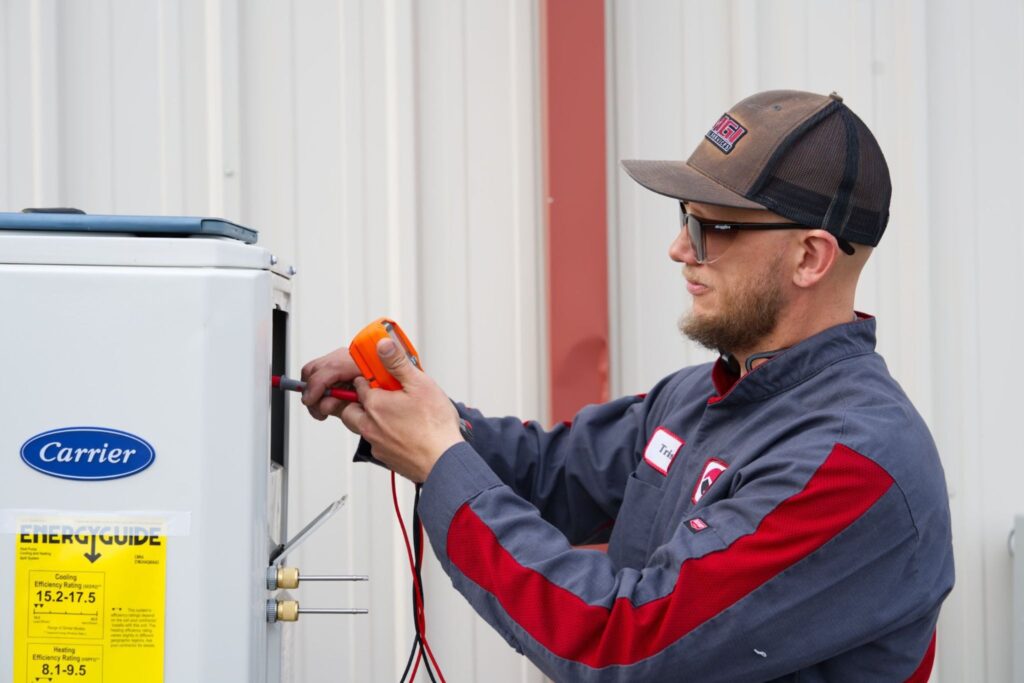
A high-quality heat pump can only perform as well as the installation behind it. Proper sizing, equipment selection, and system setup all play a major role in how efficiently the unit operates and whether savings materialize.
At MGI Mechanical Services, the process starts with understanding your home’s actual heating and cooling requirements. Our HVAC technicians use detailed load calculations, including Manual J assessments, to determine the right system size instead of relying on basic estimates. They also evaluate factors like existing ductwork, airflow, insulation, and your home’s layout before recommending equipment.
Contact MGI Mechanical Services today to schedule a consultation and find out how a professionally installed heat pump can improve your home’s comfort and efficiency.